Abstract
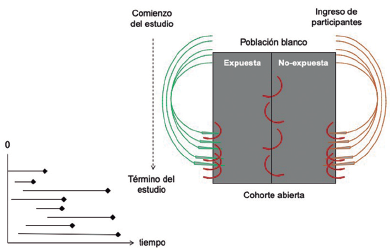
As we mentioned in a previous article (Cohort studies. 1st part. Description, methodology and applications), cohort studies are characterized by being observational, longitudinal and analytical studies; and in all of them an exposure, a follow-up period, eventual loss of follow-up; and an outcome should be considered. A number of modifications and variants to the traditional cohort study design have been proposed. A summary with the main characteristics of population-based cohort studies, bidirectional cohorts, and of other variants according: to the number of cohorts (single and multiple), to the recruitment of the study population (closed and open), to the exposure (fixed and dynamic); nested case-control study, cohortcase, and occupational cohorts (simple with external reference population, simple with internal reference group and multiple cohorts), are described. Finally, examples of the literature of the most frequent cohort variants are developed. The aim of this manuscript was to generate a study document referring to some of the modifications and variants of cohort studies.